How Much Do Floating Staircases Cost and Are They Worth It?
February 11, 2026


Floating staircases have become one of the most striking features in contemporary homes, transforming a purely functional element into a bold architectural statement. At Coastal Stairs, we see more homeowners, designers and builders asking the same questions at the start of every project: how much will a floating staircase really cost and is it genuinely worth the investment? The answers are not as simple as a single price tag. Materials, design complexity, engineering requirements and installation conditions all play a major role in the final figure and in the long-term value of the staircase.
In this article, Coastal Stairs explores how these factors influence cost, from the choice of timber, steel and glass to fixing methods and building regulation compliance. Readers will learn what sits behind typical price ranges, how bespoke details change the budget and where savings are possible without compromising safety or aesthetic impact. Just as importantly, we will look at whether floating staircases deliver a return in everyday use, improved light and space and overall property value. By the end homeowners will be better equipped to decide if a floating staircase is the right financial and design decision for their project.
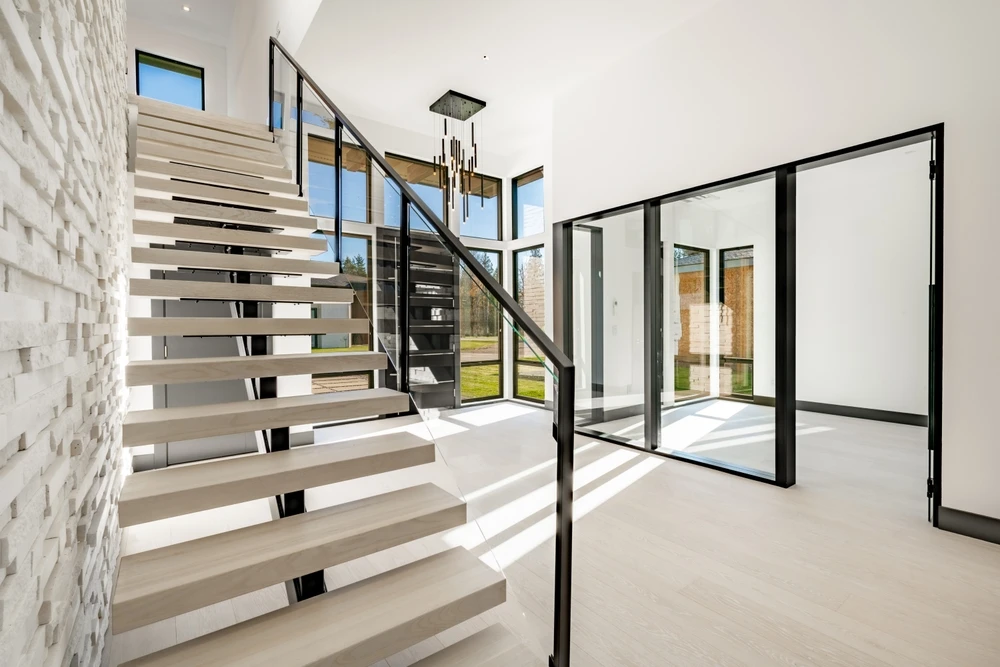
The cost of a floating staircase can vary widely because it is a structural feature as much as a design choice. Homeowners are often surprised that what looks like a simple, minimal staircase is actually a complex engineered element that must meet strict safety and building code requirements.
To understand pricing, it helps to look at the factors that most affect cost. These range from the materials and structural design through to site conditions and the level of custom detail. Knowing these drivers makes it easier to plan a staircase that fits both budget and vision.
Material choice is one of the biggest cost drivers. A simple painted timber stair with a steel stringer will usually sit at the lower end of the price range, while premium hardwood treads combined with a feature steel spine or hidden structural supports will increase costs.
Timber treads in standard species are generally more affordable than premium species or very thick feature treads. Glass treads are possible but are typically the most expensive due to the need for laminated, toughened glass and specialist fixings. Likewise, the main structure can be a single central steel spine, a pair of side stringers or a fully concealed system fixed back to a wall or hidden frame. Concealed systems take more design and steelwork, so they cost more than visible steel stringers.
Balustrades and handrails are also significant. Slimline steel balustrades are often more economical than structural glass. Frameless or near-frameless glass balustrades require thicker glass, precision hardware and careful installation, so they can add substantially to the total.
The overall size and shape of the staircase has a clear impact on price. A straight single flight with a standard rise and going is the most cost-effective to design and install. Once a design includes winders or landings, such as an L-shape or U-shape, the amount of material increases and so does the time required for fabrication and installation.
Ceiling height also matters. Higher floors need more treads and longer balustrades, which raises both material and labour costs. In tight spaces it can take more design work to meet code while still achieving a floating look.
Site conditions influence cost more than many people expect. Installing a floating stair into a new building where the structure can be planned around the stair is usually simpler than retrofitting into an existing home. In an existing house, extra steelwork or framing may be required inside walls or floors to support the new stair and access for handling long steel sections or large glass panels can add to labour costs.
A highly customised staircase will always cost more than a design based on proven details. Unique tread shapes, bespoke brackets or complex junctions with floors and walls all require additional design time and skilled fabrication.
Finishes have a noticeable effect too. Clear-finished hardwood with feature grain, powder-coated or custom-finished steel and low-iron glass all sit at a premium compared to painted timber or standard steel finishes. Integrated lighting is another optional extra that can add both drama and cost since it often requires coordination between stair builders in Wollongong and electricians, along with routeing or recessing within treads or stringers.
By understanding how materials, structure size and detailing work together, licensed stair builders can guide clients towards a floating staircase solution that hits the right balance between architectural impact and budget.
In Australia floating staircases usually start around $8,000 to $12,000 for a simple straight flight in a standard home and can climb to $50,000 or more for premium designs with custom steel work and high‑end finishes. The wide range comes down to design complexity, materials, engineering and installation conditions in each property.
For most professional stair builders, a typical mid‑range floating staircase for a two‑storey home tends to cost between $12,000 and $30,000 installed. Understanding what drives those figures helps homeowners plan realistically and decide where to invest and where to keep things simpler.
The first and biggest factor is the design. Straight single flights are the most economical. As soon as the design introduces winders, mid‑landings or U‑shapes, the price rises because the steel support structure and detailing become more involved. Custom balustrade layouts or hidden fixings also add time and cost.
Material choice is the next major driver. Approximate installed ranges most homeowners see are:
Glass and steel balustrades add significantly to cost compared with simple batten or rail systems because of material price and installation time. Frameless toughened glass with minimal hardware usually sits at the top of the balustrade price range.
The staircase is only one part of the total budget. The home itself often needs preparation to safely carry a floating design. In new builds the engineer can design the structure around the staircase, which usually keeps additional costs modest. In renovations it can be more complex.
Older homes may require reinforcing walls or floors to support a cantilevered or mono‑stringer system. Allowance may be needed for demolition of the old stair, patching floors and ceilings and sometimes relocating services like lighting or air‑conditioning ducts. These works can add anywhere from a few hundred dollars for minor adjustments to several thousand when structural changes are required.
Compliance with the National Construction Code and local council rules is mandatory and may involve engineering certification and detailed shop drawings. On a straightforward project these professional services are usually included within the staircase package. On complex or architecturally demanding designs the extra engineering can add $1,000 to $3,000 to the overall spend.
Prices do vary across Australia. Metropolitan areas such as Sydney, Melbourne and Brisbane often see higher labour and material costs than some regional centres. Site access also matters. Tight internal access, limited crane access or difficult delivery routes can increase installation time and therefore labour charges.
Finally, the choice between a volume builder’s standard stair supplier and a specialist affects pricing. A project home builder may offer a relatively simple floating stair upgrade for a set fee. By contrast, a fully customised design from a stair specialist will cost more but gives greater control over materials, finishes and detailing, which is often what clients are seeking when they look for a floating staircase.
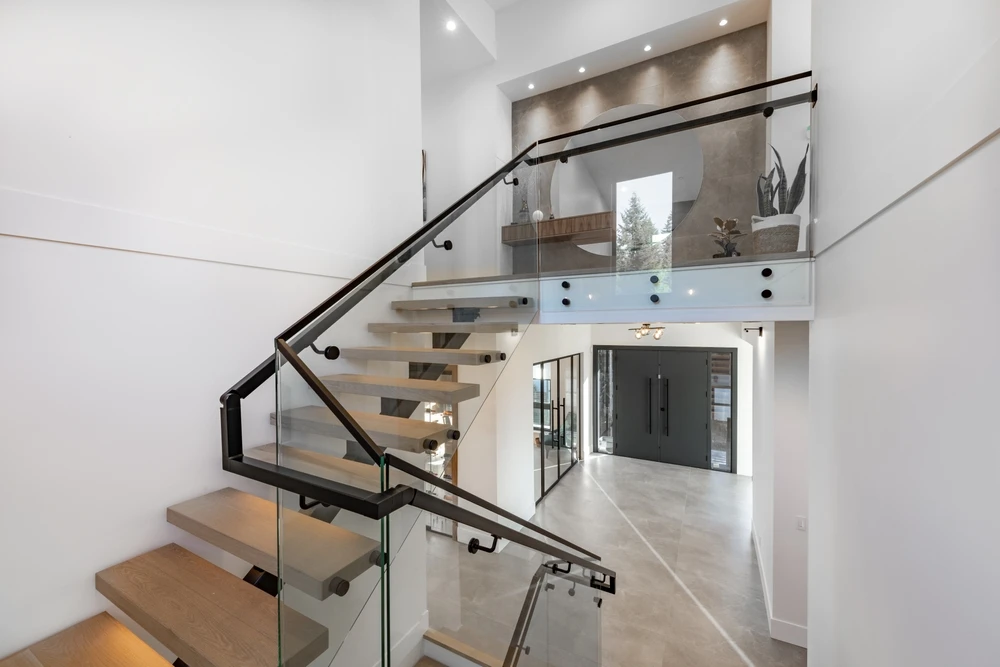
Floating staircases are usually more expensive upfront than standard framed stairs, so the key question is whether the added cost pays off in value, usability and longevity. For many coastal homes the answer is yes, provided they are specified correctly for the space and built to a high standard.
They can increase perceived property value, open up living areas and create a contemporary focal point that photographs beautifully for listings. However, they are not the right fit for every layout, budget or household, so it is important to weigh both financial and practical factors.
Floating staircases can significantly lift the look and feel of a home. Buyers often associate them with architect‑designed properties, which can help a listing stand out in a competitive market.
The strongest return is usually seen when:
In many mid- to high‑end properties a well-executed floating staircase can help justify a higher asking price because it upgrades one of the main architectural features buyers notice on entry. While it is hard to put an exact percentage on value, uplift agents commonly report improved buyer interest and faster sale times when an old enclosed stair is replaced with a floating design.
Beyond resale value, a staircase is used many times a day, so it must perform well in everyday life. Floating stairs can make a hallway or living room feel larger and brighter because light flows between the treads. This can be especially effective in coastal homes where views and natural light are key selling points.
From a maintenance perspective:
Safety is another consideration. For families with young children or elderly occupants, a floating staircase must have compliant riser gaps, suitable handrails and appropriate slip resistance on treads. With the right detailing and adherence to building codes, a floating staircase can be just as safe as a traditional stair, but it should never be treated as purely decorative.
Floating staircases typically cost more initially due to structural steelwork and higher specification finishes. The investment tends to be most worthwhile when the staircase is part of a broader renovation or new build where the design is integrated from the start.
They are usually a smart investment when:
If the budget is tight, professional stair builders can often tailor a design with a simpler structure or more economical materials that still delivers a floating look. In that way the homeowner can balance aesthetic impact with a sensible overall spend and gain a feature that supports both lifestyle and future resale.
In the end, floating staircases are not just a design trend; they are a long‑term investment in how a home feels, functions and holds its value. Throughout this article, we have broken down the realistic cost ranges and the factors that drive pricing up or down, such as materials, structural work, code compliance and custom fabrication.
If you are working within a tighter budget or timeline, or your project has structural limitations, there are still smart ways to achieve a clean, modern look without overextending. The key is going into the process with clear expectations, a realistic budget and a partner who can guide you through the technical details as carefully as the aesthetic ones, so your staircase doesn’t just look impressive in photos, it performs beautifully and safely for decades.

