Replacing Carpeted Stairs with Timber: What to Know Before You Start
May 13, 2026


Replacing carpeted stairs with timber can completely change the look and feel of a home, but the process is rarely just a cosmetic upgrade. Once the carpet is removed, the condition of the underlying staircase, tread materials, fixings, nosings and structural details can all influence what is possible. Coastal Stairs draws on practical experience as stair builders in Wollongong to explain why a timber stair conversion should be properly assessed before removal or installation work begins.
This article explores what should be checked before carpeted stairs are converted to timber, including the condition of the existing structure, whether the staircase can be refinished, overlaid or rebuilt, and how safety, noise, comfort and maintenance should be considered during the planning stage.
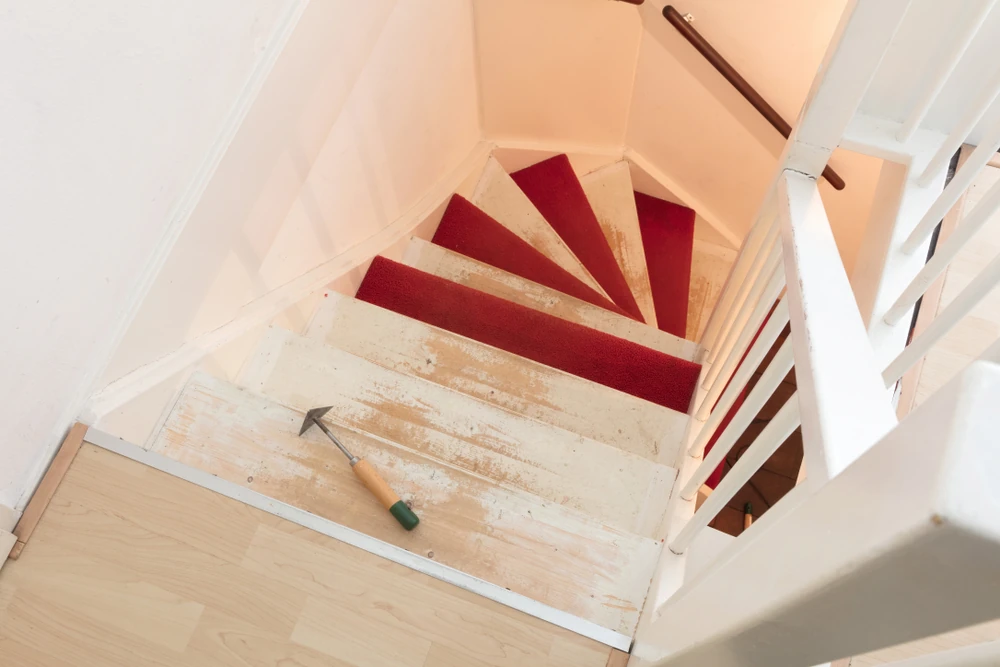
Pulling up stair carpet rarely reveals a finished timber staircase ready to stain. The structure under the carpet has usually been built with the assumption that it will remain covered, so the materials, layout and condition can be surprising. Understanding what is typically found beneath the pile helps set realistic expectations around time, cost and the scope of work involved in converting to exposed timber.
Before the first strip of carpet is lifted, it is worth assuming some repairs or upgrades may be needed. The substrate, nosings and edges are often shaped for comfort underfoot and to grip carpet rather than to showcase an attractive timber finish.
The most common surprise is that there is no feature timber at all. Many internal staircases are built from structural materials designed for strength, not appearance.
Treads are often plywood, particleboard or low-grade pine with visible knots, plugs and stamps. These surfaces are usually rough, patched around fixings and may have depressions where staples and underlay have compressed the board. Even where solid hardwood is present, it is often a mix of species or short lengths joined together, which can stain unevenly.
Stringers and risers are usually construction grade and may show gaps, packing pieces and overcuts that were never meant to be visible. Turning these components into a visually consistent timber staircase often requires overlaying the existing structure with new hardwood treads and risers rather than simply sanding and coating what is already there.
Carpeted stairs typically hide a lot of hardware and adhesive. Dozens of staples can be driven into each tread to hold the underlay and carpet in place. Once removed, they leave small holes and splintering along the edges that need to be repaired before any clear finish is applied. Carpet gripper strips are usually nailed or pinned along the back of each tread and at landings, so removing these can leave more holes and sometimes chipped nosings.
Adhesive residue is also common along the front edge and sides, particularly on winders or curved sections. This glue must be scraped and sanded away properly, or it can show through clear coatings and affect stain colour. In older homes, tack strips and fixings can also reveal minor rot, edge deterioration or past water damage where a spill soaked through the carpet and remained hidden.
Beneath the coverings, creaks can often be traced to loose treads, poor fixings or wedges that have worked free. These issues may be masked by carpet but will become more obvious once the timber is exposed, so repairs and re-fixing are usually required before finishing.
Because carpet covers joints, the original staircase may have been built with larger tolerances. Gaps between treads and stringers, uneven riser heights and slightly out-of-square corners are common. Carpet and underlay conceal these irregularities, but a clear finished timber surface will highlight them.
Nosings on carpeted stairs are also often shaped differently. They may be shorter or have square edges designed to work with gripper strips and underlay rather than the rounded or detailed overhang expected on a finished timber stair. Rectifying this can mean fitting new nosing pieces or replacing the treads so the finished stair looks refined and supports safe use.
Before ripping up carpet, it is important to understand what sits underneath and how much of it can be safely reused. The right approach depends on the condition, strength and layout of the existing staircase, as well as the desired finish and budget. In many cases, the underlying structure can be retained even if new timber treads and risers are required.
A professional staircase assessment typically looks at frame integrity, tread thickness, squeaks, compliance with building requirements and how easily new timber elements can be fixed in place. From there, the choice is usually between refinishing what exists, overlaying it with new timber or undertaking a partial or full rebuild.
Refinishing is only an option if solid timber treads already sit under the carpet and are in sound condition. Once the carpet and underlay are removed, the treads should be checked for:
If the treads are structurally sound, the surface can often be sanded back and stained or coated. Nail holes from carpet grippers may need filling, and some edges may require squaring or minor repairs to achieve a clean timber look. This approach usually suits older homes where hardwood stairs were carpeted later for comfort rather than stairs that were originally built to remain covered.
Covering the existing staircase with new timber treads and risers is a common solution when the structure is sound but the visible surfaces are poor or unattractive. New timber components are fitted over the existing treads and risers, keeping demolition to a minimum while creating the appearance of a purpose-built timber stair.
This option requires careful attention to:
The stringers and handrail can often stay in place while the walking surfaces are transformed. This can be a cost-effective way to achieve a high-end timber finish without replacing the entire staircase.
A rebuild is usually required when the staircase is structurally compromised or the layout no longer suits the space. Warning signs include significant movement, sagging treads, loose stringers, excessive squeaking or non-compliant rise and going that cannot be corrected with overlays.
A rebuild may involve retaining the surrounding wall structure while constructing a new stair frame and installing new treads, risers, stringers and balustrade. This provides the opportunity to change stair width, configuration or style to better suit the property while ensuring the finished staircase is safe and compliant.
Although more involved, a rebuild often delivers the best long-term outcome where safety or structural integrity is in doubt, or where a major renovation is already underway.

Switching from carpet to timber immediately changes how stairs feel underfoot. Carpet hides minor irregularities and provides grip and cushioning. Once removed, every imperfection and safety issue becomes more noticeable. Careful attention to safe stair design, including slip resistance, consistent dimensions, nosing details, handrails and lighting, is essential to keep the staircase both attractive and safe.
A timber stair can be perfectly suitable for a busy household if it is detailed correctly. The key is to control how slippery the surface is, especially in socks or with wet feet, while maintaining reliable support and clear visibility on every step.
Carpet naturally provides friction. Smooth timber does not. A glossy polyurethane finish on treads can become slippery, especially on steeper stairs or in homes with children or older occupants.
For residential stairs, a lower-sheen product such as a matt or satin finish is generally more practical than a high-gloss coating. Some finishes are specifically rated for slip resistance and may be preferred, particularly in coastal locations where feet may be sandy or damp. Where extra grip is required, options may include:
Timber stairs should not be left unfinished. Bare timber can become polished by foot traffic, creating unpredictable grip while also increasing surface wear.
Carpet can disguise slightly uneven treads or rounded edges. When changing to visible timber, these inconsistencies become more critical because each step needs to feel predictable underfoot.
Tread depth and riser height should be checked against relevant building requirements before work begins. Existing stairs in older homes may not align with current standards, and modifying only the surface may not be enough if the staircase is already unsafe. As a practical rule, risers should be consistent across the flight, with only minimal variation. Even a small difference can create a trip risk when someone is moving quickly or walking in low light.
The nosing at the front edge of the tread is another detail that affects safety. It should project consistently and not be excessively rounded or sharp. Some projects add non-slip inserts into the nosing, increasing grip where the foot lands. All edges should be securely fixed with no movement or flex that could catch a shoe.
Once the carpet is removed, sound, vibration and grip can all change. Small slips are more noticeable, which makes reliable support more important. A continuous, sturdy handrail on at least one side of the stairs is essential. The height of the handrail and the spacing of balusters should also meet local requirements to reduce fall risk, particularly for children.
Lighting is equally important. Timber treads can reflect or absorb light differently from carpet. Good illumination at the top and bottom of the staircase helps minimise missteps. Where stairs change direction or where natural light is limited, additional wall lighting or stair lighting can make the staircase easier to use safely.
Visual contrast should also be considered. Dark treads with dark risers can make individual steps harder to distinguish, especially for older eyes. Using a slightly lighter or darker nosing detail, or painting risers in a contrasting tone, gives clearer edge definition so each step is easier to identify.
Switching from carpet to timber can dramatically change how stairs sound, feel and wear over time. The surface becomes harder underfoot, footsteps carry differently through the home and cleaning needs shift from vacuuming fibres to caring for a finished timber surface. Understanding these differences in advance helps set realistic expectations and informs smarter material and finish choices.
Noise, comfort and maintenance are usually the first things noticed after the carpet is removed. Each can be managed with the right preparation, fixing method, finish and detailing so timber stairs look refined without becoming loud, slippery or high maintenance.
Timber reflects sound, whereas carpet absorbs it. As a result, footsteps, pet claws and dropped items tend to be more audible on timber treads. In multi-storey homes, sound can transfer to adjoining rooms or downstairs spaces.
Noise can be reduced rather than eliminated. Effective strategies include:
For households with young children, pets or shift workers, a stair runner fixed over the timber can balance the visual appeal of timber with some of the sound-deadening benefits of carpet.
Carpeted stairs feel cushioned and warm, while timber is firmer and can feel cooler in winter. Many people appreciate the solid, stable feel of timber, but the change can be noticeable on bare feet and joints.
Comfort can be improved by choosing a timber species and finish that suits the household. Very hard timber species may feel less forgiving underfoot, while softer species can mark more easily. A satin or matt finish can feel more natural to walk on than a high-gloss surface, and detailed nosings can improve confidence without compromising the clean timber appearance.
In coastal locations where sand is common, timber can be easier to manage than carpet. Grit carried inside tends to sit on the surface instead of sinking into the pile, making it easier to remove before it causes wear or uneven footing.
Maintenance requirements shift from fabric care to surface care. Timber stairs generally collect the same dust and debris as carpeted stairs but are often quicker to clean. Typical routine maintenance includes:
Over time, timber may show surface scratches in high-traffic areas or from pets. Unlike carpet, which often needs full replacement when heavily worn, timber can usually be sanded and refinished to restore its appearance. Choosing a durable finish, placing felt pads under furniture near the top and bottom of stairs, and trimming pet nails can all help extend the life of the coating and keep the staircase looking sharp for longer.
Replacing carpeted stairs with timber is far more than a surface-level renovation. The success of the project depends on the condition of the existing staircase, the suitability of the structure for refinishing or overlays, the quality of the timber and finish selected, and the attention given to safety, acoustics and long-term maintenance.
A well-planned timber stair conversion can deliver a cleaner appearance, improved durability and lasting value, but it should begin with a realistic assessment of what is hidden beneath the carpet. Careful preparation and precise installation help ensure the finished staircase looks refined, performs safely and stands up to daily use.

