What Is a Mono Stringer Staircase and Is It Right for Your Home?
June 24, 2026


Modern staircases are increasingly being viewed as architectural features rather than purely functional elements, and mono stringer designs have become a popular option in contemporary homes. For homeowners comparing designs and speaking with stair builders in Wollongong, Coastal Stairs highlights the importance of balancing structural performance with a clean, minimalist appearance.
Understanding how these staircases are engineered is essential before deciding whether this design is suitable. From structural requirements to material choices, compliance and everyday use, a closer look at mono stringer staircases can help determine whether this modern solution is the right fit for a particular home and lifestyle.
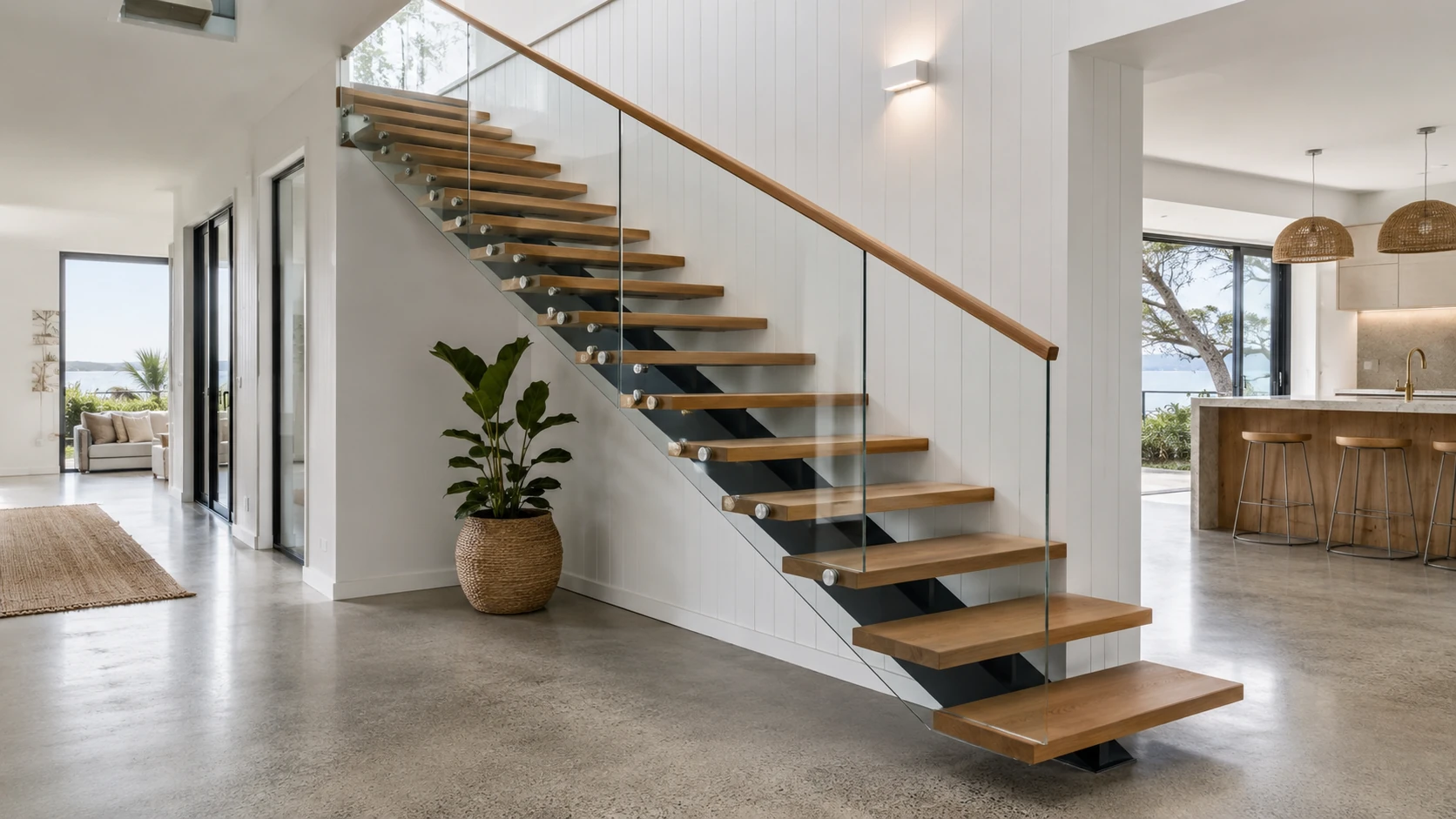
A mono stringer staircase is a modern stair design that uses a single structural beam to support the treads. Instead of two side stringers or a closed box-style construction, the weight of the steps is carried by one central spine, typically made from steel. This creates an open, minimalist look, with treads that appear to float while still meeting structural and safety requirements when correctly designed and installed.
Mono stringer systems are highly customisable and can be paired with a wide range of tread materials, balustrade styles and finishes. The result is a staircase that acts as both a functional route between floors and an architectural feature suited to contemporary, coastal and open-plan interiors.
The defining feature of a mono stringer staircase is its single load-bearing stringer. This central beam usually runs beneath the middle of the treads and follows the rise of the stairs. It can be straight, L-shaped, U-shaped or curved, depending on the layout of the home.
The stringer is commonly fabricated from:
Each tread is fixed directly to the central spine using welded brackets, bolted connections or concealed hardware. Engineering calculations are critical because the forces from everyday use transfer into one central beam and then into the floor and landing structures. Tread spacing, load capacity, fixing points and connection strength all need to be carefully assessed before fabrication and installation.
Because mono stringer staircases are usually custom-made, accurate site measurements are also important. Floor heights, wall positions, openings, balustrade fixing points and finished floor levels all need to be coordinated to achieve a precise fit and a compliant finished staircase.
Unlike conventional staircases that often have two side stringers or enclosed timber framing, a mono stringer staircase concentrates the structure into one central element. This difference has both visual and practical effects.
The open construction reduces the visual mass of the stair, which can make compact or darker spaces feel larger and brighter. Without bulky framing at the sides, the staircase allows more light to pass through and creates clearer sightlines between living areas.
Mono stringers can also offer more freedom beneath the staircase. Depending on the layout, the space below may be used for open storage, feature furniture, display shelving or simply left clear to maintain a more open interior.
From an installation perspective, mono stringers are commonly prefabricated as a single steel spine or as sectional components before being fixed into the building structure. This can support a clean and efficient installation process, but it requires accurate planning and coordination with the surrounding structure.
Mono stringer staircases have become popular in contemporary residential design because they combine a light visual footprint with strong structural performance. Homeowners are often drawn to their open appearance, their ability to showcase materials and the way they suit modern interiors without adding unnecessary bulk.
One of the main reasons mono stringers are chosen is their clean architectural look. With a single central beam and open sides, the staircase appears lighter than many traditional designs. This suits minimalist interiors, open-plan living areas and modern coastal or urban homes.
Because there are no bulky side stringers enclosing the treads, the staircase can become a design feature without overwhelming the space. The simple form also allows the materials, such as timber, steel or glass, to become part of the overall interior design.
Mono stringer staircases work well in homes that prioritise natural light and openness. Open risers and a central spine allow light to pass between levels, helping the stairwell feel less enclosed.
This can help:
In homes with large windows, open voids or feature glazing, a mono stringer staircase can complement the light-filled design rather than blocking it.
Another reason for their popularity is their flexibility. A mono stringer can be straight, L-shaped, U-shaped or designed with landings and winders to suit different floor plans. The central spine can then be paired with a wide range of tread and balustrade materials.
Solid timber treads are often used for warmth, while steel, stone or engineered materials can create a more industrial or highly contemporary look. Balustrades can also change the overall style. Frameless glass creates a very open effect, while slim steel, cable or timber details can create a more defined architectural finish.
This adaptability allows a mono stringer staircase to work with existing flooring, joinery, wall finishes and colour schemes rather than feeling separate from the rest of the home.
Although mono stringer staircases have a minimal appearance, they are still engineered to meet structural and safety requirements. Their appeal often comes from the clear expression of structure, where the central spine, treads and balustrade are all visible and carefully detailed.
This design can age well because it relies on clean lines, balanced proportions and durable materials rather than heavy decorative detailing. When well designed, a mono stringer staircase can remain visually relevant for many years and may contribute to the overall perceived value of the home.
A mono stringer staircase can be tailored to suit a wide range of interior styles through the careful selection of materials and finishes. The central spine, treads, balustrade and handrail can each be specified differently, allowing the staircase to look ultra-modern, warm and coastal, industrial or understated.
Material choices affect more than appearance. They also influence durability, maintenance, comfort underfoot and cost.
The mono stringer itself is typically fabricated from steel for strength and stability. Heavy-gauge mild steel or structural steel is commonly used because it can support long spans with a relatively slim profile.
In coastal or humid environments, corrosion protection is especially important. Hot-dip galvanised steel, stainless steel or high-quality protective coatings may be considered to reduce the risk of rust and long-term deterioration.
Visible steel stringers are often finished with:
Powder coating is a practical option because it provides a durable finish in a wide range of colours. Light neutral tones can help the stringer recede visually, while darker colours such as charcoal or black can highlight the sculptural form of the staircase.
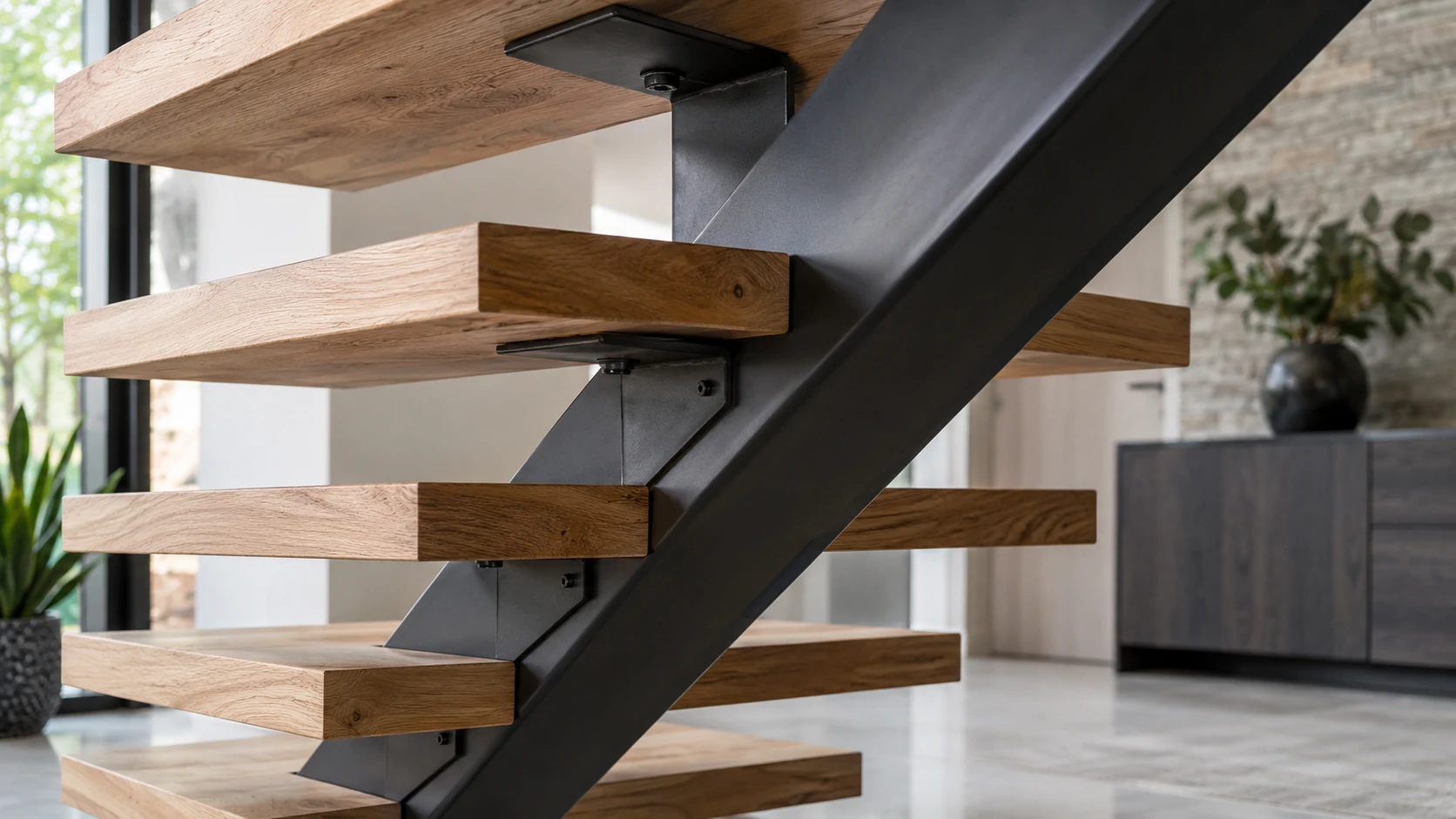
Treads have a major impact on the appearance and feel of a mono stringer staircase. For warm contemporary or coastal interiors, solid timber treads are a common choice. Species such as oak, ash, blackbutt and other light to mid-tone hardwoods can create a natural finish that works well with modern homes.
Timber treads may be:
For a sharper industrial or ultra-modern look, steel plate or folded steel treads can be used. These are often powder-coated to match or contrast with the stringer. In some designs, steel treads may be combined with timber overlays to soften footfall while retaining a slim metal edge.
Stone or engineered stone treads can also be used for a more substantial architectural finish. However, these materials are heavier and require careful structural design to ensure the staircase can safely support the additional load.
Balustrade choice determines how open or enclosed the staircase feels. Frameless or minimally framed glass balustrades maximise light and help maintain the floating appearance of the treads. Toughened or laminated glass is commonly used with polished, brushed or powder-coated fixings.
For a more defined architectural finish, vertical steel balusters or slim flat bars can create a crisp linear look. These are often powder-coated to match the stringer or finished in a contrasting colour. Cable balustrades may suit some coastal-inspired interiors, but they must be designed carefully to meet spacing and tension requirements.
Handrails may be made from timber, stainless steel or powder-coated steel. Timber handrails add warmth and comfort underhand, while metal handrails create a more minimal profile.
Details such as tread nosings, concealed fixings, weld quality, bracket alignment and transitions between materials are also important. These smaller elements can determine whether the finished staircase feels refined and integrated or overly structural.
A mono stringer staircase can transform the look of a home, but it is not the right choice for every space, household or budget. Before committing, it is important to consider how the staircase will perform in daily use, what it requires structurally and how it fits with the overall design of the home.
A mono stringer staircase works best in spaces where its open profile can be appreciated. It is particularly effective in open-plan layouts, entry voids and areas where natural light and visual connection are important. In a very narrow hallway or enclosed stairwell, much of the floating effect may be lost, and a more traditional design may be more practical.
Because the central spine carries the load of the staircase, the surrounding structure must be able to support the forces at the base, landing and upper-floor connection points. This may require:
Early coordination with a structural professional is especially important when replacing an older staircase in an existing home.
Mono stringer designs are often chosen for their minimal appearance, but safety and compliance cannot be compromised. In Australia, staircases need to be designed in line with relevant National Construction Code requirements, Australian Standards and local compliance expectations.
Key considerations may include:
Open risers are common in mono stringer designs, but gap sizes need to be carefully controlled. For households with young children, pets, older residents or anyone with reduced mobility, more enclosed balustrades, non-slip finishes and wider treads may provide a greater sense of security.
Comfort is also important. A staircase that looks dramatic but feels steep, narrow or exposed may not be ideal for everyday use. Tread width, handrail position, lighting and the overall rise and going of the stair should all be considered before finalising the design.
Mono stringer staircases often involve custom steel fabrication, precise measurement and detailed installation. This usually makes them more complex than basic conventional staircases. Curved designs, switchback layouts, large glass panels, premium hardwoods and specialised finishes can all increase cost and lead time.
Maintenance expectations should also be considered. Powder-coated steel and hardwood treads are durable, but timber may need refinishing over time. Glass balustrades help maintain an open look but show fingerprints and smudges more readily. In coastal or humid environments, protective coatings on steel are particularly important.
For busy households, finishes that hide minor scuffs and marks may be more practical than very dark, glossy or highly reflective surfaces. Choosing materials that suit the way the home is used will help the staircase remain attractive and functional over the long term.
A mono stringer staircase may be a good choice for homeowners who want a modern, open and architectural staircase that enhances light flow and becomes part of the interior design. It can work especially well in open-plan homes, coastal interiors, contemporary renovations and new builds where the staircase is intended to be a visual feature.
However, it needs careful planning. The structure must be properly engineered, the materials must suit the environment and the design must comply with Australian building requirements. Safety, comfort, maintenance and budget should be considered alongside appearance.
A mono stringer staircase offers a distinctive combination of structural efficiency and contemporary design, making it a popular option for modern residential interiors. Its single central spine creates an open, streamlined appearance that improves sightlines, supports natural light and allows the staircase to become a defining architectural feature within the home. By considering layout, structural support, safety requirements, materials, maintenance and cost, homeowners can decide whether a mono stringer staircase aligns with both their practical needs and design goals.

